
UNESCO biosphere to cover all of Lewes district
A Cabinet councillor has welcomed the expansion of The Living Coast UNESCO Biosphere, the UK's only urban biosphere, to encompass the whole of Lewes district for the first time.
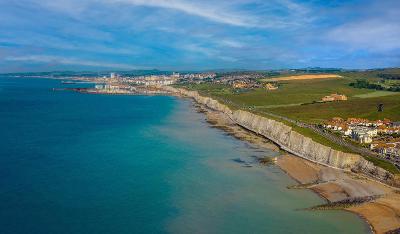

The expansion will see the biosphere's reach extend from Goring in the west to Seaford in the east, incorporating all of Adur & Worthing and the whole of Lewes district. This brings the number of residents included in the biosphere from over 330,000 to nearly 550,000.
The newly established area encompasses cherished environmental and cultural jewels, such as Cuckmere Haven, Cissbury Ring, and Chailey and Ditchling Commons. Public engagement showed strong support for this increase, which provides even more opportunities for The Living Coast to connect people with nature.
Councillor Emily O'Brien, Cabinet Member for Climate, Nature and Food Systems, said: "Many residents and groups across Lewes district are working hard to protect and enhance nature, and there was good support to extend the biosphere boundary to reflect this collective effort. So I'm absolutely delighted that The Living Coast has agreed to do just that and will now include the entire district within the UNESCO Biosphere area.
"Working together makes us all stronger. Lewes district is already playing an active part in this important partnership, with particular expertise in areas like river restoration and working with our communities, so we're looking forward to more opportunities as a result of the expansion."
James Bridge, Chief Executive and Secretary-General of the UK National Commission for UNESCO, said: "The renewal and expansion of The Living Coast UNESCO Biosphere Reserve demonstrates the strength of partnership in action, bringing together local communities, councils, universities, and conservationists around a common goal for a more sustainable future. As part of UNESCO's global network of over 700 Biospheres, The Living Coast will continue to play an essential role in linking the UK's places and people to international solutions for biodiversity, climate, and education. Congratulations!"
The Living Coast continues to support local partners' projects such as a trawler ban to allow marine habitats to regenerate; the restoration of the Cockshut chalk stream in Lewes; the Kelp Recovery Project led by Sussex Wildlife Trust; and Sussex Bay.
Other project achievements over the last decade include delivering toolkits and coaching to support local tourism businesses improve their environmental sustainability; protecting underground water supplies through rain gardens on streets, in parks and in schools; and the opening of a new national trail.
Operating as a cross-sector partnership of over 40 organisations, The Living Coast aims to protect and enhance our wildlife and habitats; promote a sustainable economy and communities; and champion environmental education, training and research.
Future priorities for the partnership include advancing sustainability education and utilising the designation to foster a stronger sense of local pride. The Living Coast is actively working to involve more young people, recently recruiting two youth volunteers to ensure diverse youth voices are represented in the Biosphere's decision-making.
For more information, visit The Living Coast report of the last 10 years and vision for the future.
Picture credit: The Living Coast and Visual Air
More ways to receive our news
- Keep me posted. Sign up to receive news and alerts from Lewes council by email
- Read District News - our council newspaper
- Our Social media


