
New wetlands project set to bring wildlife benefits
Work has begun on the first phase of a project which aims to restore the wetland habitats of Landport Brooks in Lewes, to create a better environment for wildlife.
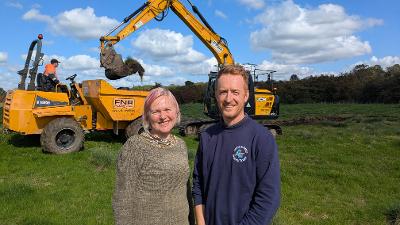

Landport Brooks was once known for having the largest breeding population of common toads in Sussex, but their population has declined over the past 20 years, as the area goes from being inundated with water to completely dry.
Over the next 18 months, the Landport Brooks Restoration Project will restore historical ditches and enhance the marsh landscape by creating shallow pools called scrapes. This will help hold water on the site during the late spring and summer, which will benefit a variety of wildlife and restore much-needed habitats for amphibians. Alongside this, there will be a focus on restoring the Paper Mill Cut, a small chalk stream that runs through the site.
Councillor Emily O'Brien, Cabinet Member for Cabinet Member for Climate, Nature and Food Systems, said: "This is a vital project to restore the ecological health of Landport Brooks. By reintroducing wetland features and creating new scrapes, we will improve water retention which is crucial for many species of wildlife."
"This scheme builds on the success of the Cockshut Restoration Project which has become an oasis for new flora and fauna and a popular spot for visitors in Lewes."
The project was made possible thanks to funding from Lewes District Council and a grant from the South Downs National Park's Community Infrastructure Levy.
Conservation grazing with cows is also part of the restoration effort and cattle will be present over the summer and into the autumn.
While maintenance work is taking place over the next two weeks, people visiting Landport Brooks are requested to stay away from machinery on-site, keep dogs on a lead and under control and keep to the pathways.
More ways to receive our news
- Keep me posted. Sign up to receive news and alerts from Lewes council by email
- Read District News - our council newspaper
- Our Social media


